Looking after a block paved driveway
Block paving asks very little, but the one thing it does ask for is the thing almost nobody does. Here is the short version and the reasons behind it.
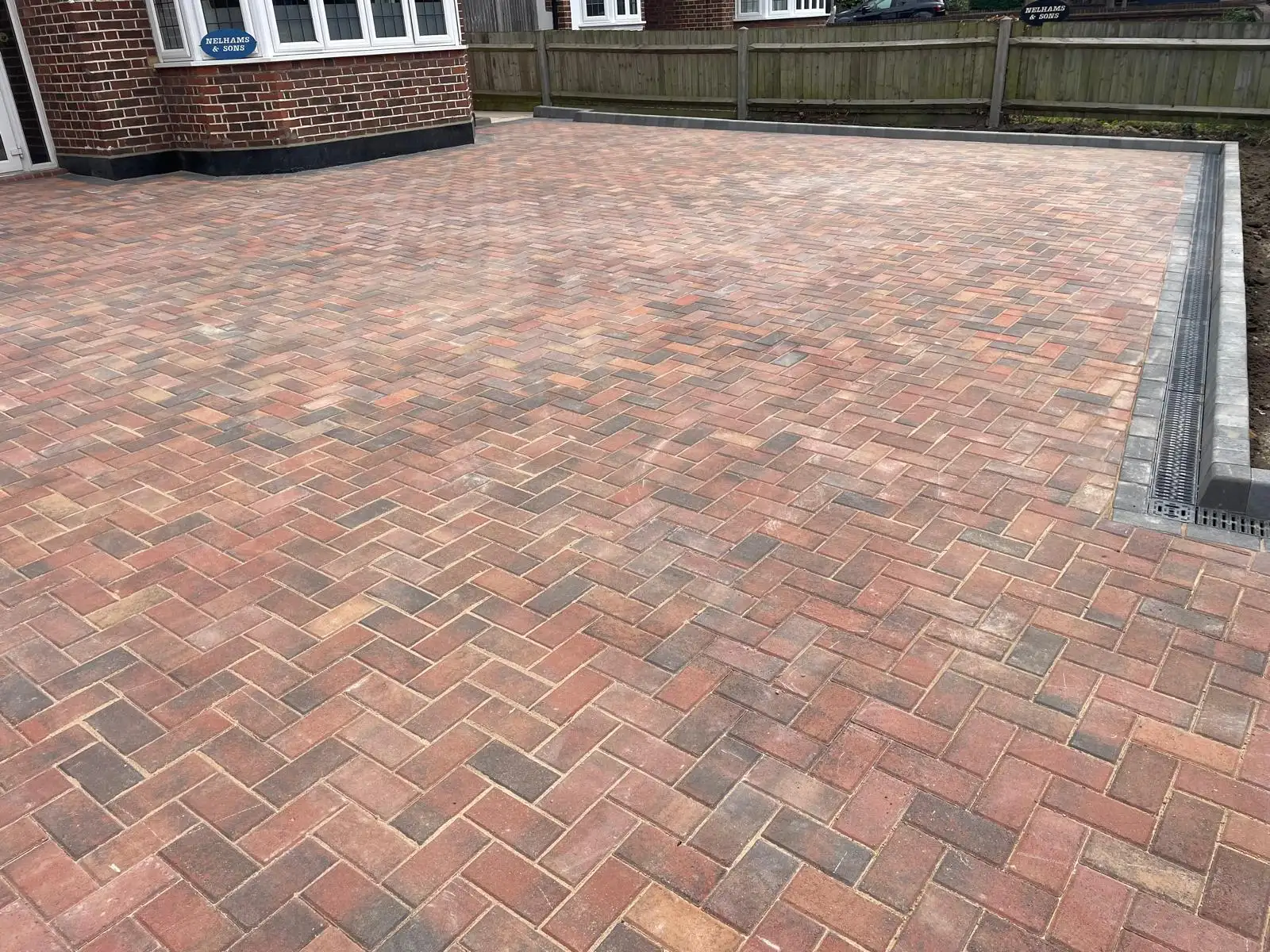
Full joints. This is what maintenance is for, and it is most of what maintenance is.
If you only take one thing from this page: keep the joints full of sand.
Block paving works because the blocks lock against each other, and the medium through which that load transfers is the jointing sand. Full joints mean a car’s weight is shared across many blocks. Empty joints mean every block works alone, rocks under load, and grinds its neighbours.
Almost every long-term block paving failure that is not a groundworks problem starts with joints that emptied and were never refilled. It is genuinely the whole of the maintenance regime, it takes half an hour, and it costs the price of a bag of sand.
What to do, and how often
| Job | How often | Notes |
|---|---|---|
| Sweep off leaves and debris | Autumn, and as needed | Organic matter left on the surface is what weeds germinate in. This is the highest-value ten minutes you can spend |
| Top up the jointing sand | Every 2–3 years | Kiln-dried sand on a conventional drive, 2–6mm grit on a permeable one. Brush in dry, on a dry day |
| Pull weeds early | As they appear | Far easier than removing established ones, which take jointing sand with them |
| Wash the surface | Every 1–2 years | Stiff brush and water is usually enough. Re-sand afterwards if you have pressure washed |
| Check the edges | Annually | Anything rocking, tipping or creeping outwards is worth acting on before it spreads inwards |
| Clear channel drains and gullies | Twice a year | A blocked drain puts water into the base, which is where real damage starts |
Re-sanding the joints
- Pick a genuinely dry day, and make sure the paving is dry too. Damp joints will not take sand.
- Sweep the surface clean and remove any weeds and moss first.
- Tip the kiln-dried sand out in heaps and brush it across the surface in several directions with a stiff broom.
- Work it in until the joints stop taking it. Keep going. They take considerably more than you expect.
- Leave a thin film on the surface for a few days so traffic and vibration settle it further down, then sweep off the excess.
- Come back and check after the first rain. Joints nearly always need a second pass.
Weeds and moss
Weeds are growing in the top of the joint, in debris, rather than up from beneath. So the answer is joint hygiene rather than chemistry. Keep the surface swept, keep the joints full, and pull anything that appears while it is small.
Moss is a moisture and shade problem. It appears where the drive is north facing, under trees, or where water sits. Persistent moss in one area is often telling you the falls are not working there, which is worth investigating rather than repeatedly scrubbing.
If you use a weedkiller, use one intended for hard surfaces and follow the label. Avoid anything containing salt, which damages concrete over time.
Stains
Oil and fuel. Act quickly. Cover fresh spills with cat litter or sand to absorb what you can, then use a proper degreaser made for paving. The genuine advantage of block paving is that a badly stained block can simply be swapped for a spare, which is worth keeping a few of for exactly this.
Rust from garden furniture or a leaking radiator needs a specific rust remover for paving. General cleaners will not shift it.
Tyre marks from power steering on a stationary car usually weather off within a few months. Leave them alone.
Things that damage block paving
- Pressure washing and not re-sanding. The single most common self-inflicted injury
- Holding the lance close and still. It strips the block face and leaves a permanent pale patch
- Rock salt in winter. Attacks concrete. Use grit instead
- Skips placed on the paving. Point loads far beyond what a driveway is designed for. Put boards under it, or the skip on the road
- Acid cleaners on efflorescence. The bloom weathers off by itself. Acid damage does not
- Sand in permeable joints. Seals the drainage path you paid extra for
If you have a driveway laid, ask for the surplus blocks to be stacked somewhere out of the way. In ten years, when a block gets stained or cracked, a handful of originals is worth a great deal more than trying to match a discontinued range.
Maintenance questions
Can I pressure wash my block paving?
Yes, carefully, and you must re-sand the joints afterwards. Every time.
Keep the lance moving, hold it at an angle rather than pointing straight down, and stay 200 to 300mm off the surface. A stationary nozzle held close will strip the surface layer off a concrete block and leave a permanent lighter patch. A rotary patio attachment is gentler and far more even than a pencil jet.
What sand should go in the joints?
Kiln-dried jointing sand on a conventional driveway. It is bone dry, which is what lets it run down into the joints rather than bridging at the top. Building sand and play sand are too damp and too fine and will not work.
On a permeable driveway, never use sand. Those joints take a 2 to 6mm clean angular grit, and filling them with sand seals the very thing that makes the driveway permeable.
Do weeds mean the driveway was badly built?
Not usually. Weeds in block paving almost always germinate in the joints from windblown seed landing in organic debris on the surface. They are growing in the top of the joint, not up from underneath.
Which is why the fix is keeping joints full and the surface swept, rather than anything structural. A membrane under the sub-base does not stop them, because that is not where they are coming from.
Is sealing worth it?
Sometimes. It helps with oil and stain resistance, stabilises the jointing sand, and can lift the colour. Against that: it needs redoing every three to five years, a poor application looks blotchy or unpleasantly glossy, and it can trap moisture if applied to damp paving.
Our honest view is that it is optional on a well-built driveway and worth considering on a light-coloured one where staining shows. Never seal new paving until it has weathered for several months and the efflorescence has cleared.
What is the white bloom on my new blocks?
Efflorescence. Lime within the concrete migrates to the surface as the block cures and leaves a white deposit. It is completely normal on new concrete blocks, it is not a defect, and it is not a sign of a problem.
It weathers off on its own, usually within the first year or two. Do not attack it with acid cleaners, which can damage the block face far more permanently than the bloom ever would.
Past the point where sand will fix it?
If the joints are empty because the blocks have started moving, re-sanding will not hold. Tell us what it is doing and we will tell you what it actually needs.
We normally reply within 24 hours.